Safety & Toxicological Testing for
Cosmetics

Every Beauty Formula Tested To Safety

At AAL Biosciences, cosmetic safety isn’t a checkbox; it’s the foundation of consumer trust. We evaluate how every ingredient, blend, and finished product interacts with the skin, eyes, and biological systems to ensure that beauty never compromises safety.

Aligned with OECD, ISO, BIS, and global regulatory frameworks, our toxicological testing services empower brands to launch products that are gentle, compliant, and ready for global markets.

407218559 ee4e0f01 8a78 439f b13e be73a5017bdc

Necessity of Safety & Toxicological Testing for Cosmetics

Cosmetic safety testing protects consumers, ensures regulatory compliance, and verifies that every formulation is gentle, stable, and fit for real-world use.


Area of Expertise

Regulatory Compliance Screening

Regulatory Compliance Screening

  • Analysis of Restricted & Prohibited Substances
Screens formulations for substances banned or limited under global regulations (EU, US FDA, ASEAN, BIS), ensuring safe market entry.

Contaminant & Impurity Profiling

Contaminant & Impurity Profiling

  • Heavy Metals Analysis
  • Residual Solvent Testing
Ensures formulations meet global safety limits for contaminants such as lead, arsenic, mercury, and solvent residues.

Preservative Efficacy & Microbial Control

Preservative Efficacy & Microbial Control

  • Preservative Efficacy (Challenge Test)
  • Microbial Limits & Endotoxin Testing
Verifies that products stay microbially safe throughout their shelf-life and usage period.

Dermal Exposure & Absorption

Dermal Exposure & Absorption

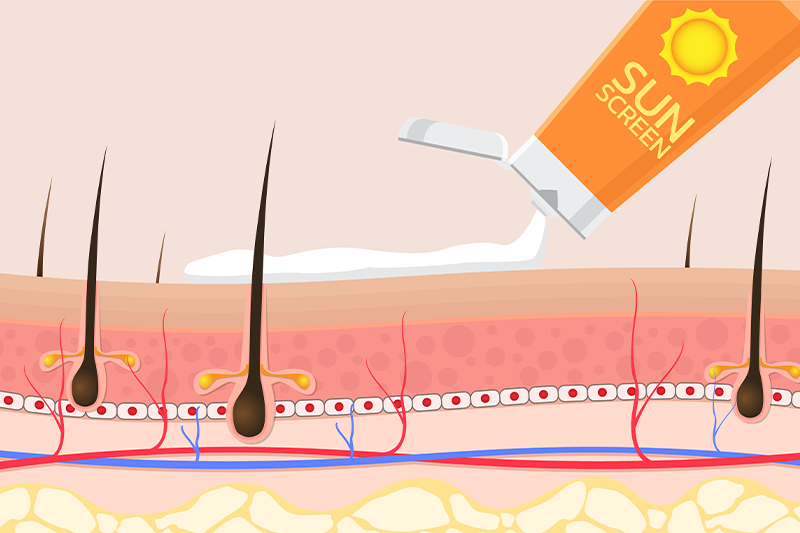
  • Dermal Absorption Studies
Determines how much of a cosmetic ingredient penetrates the skin barrier, supporting safety assessments and regulatory submissions.

Genotoxicity & Mutagenicity Testing

Genotoxicity & Mutagenicity Testing

  • Ames Test, Micronucleus Assay
Screens for DNA damage or mutation risks associated with cosmetic ingredients or impurities.

Systemic & Local Toxicity Studies

Systemic & Local Toxicity Studies

  • Acute & Repeated Dose Toxicity
Evaluates short-term and long-term safety, ensuring ingredients do not cause harmful systemic or organ-specific effects.

UV-Related Safety Evaluations

UV-Related Safety Evaluations

  • Phototoxicity & Photoallergenicity Tests
Identifies adverse reactions triggered by sunlight exposure, essential for products with photosensitive ingredients.

Ocular Safety Assessments

Ocular Safety Assessments

  • Eye Irritation & Corrosion (BCOP, ICE)
Determines the irritation risk posed by cosmetic products to the eyes using validated non-animal test methods.

Skin Safety & Sensitisation Studies

Skin Safety & Sensitisation Studies

  • Skin Irritation & Sensitization (OECD 404, LLNA)
Assesses potential for skin reactions, irritation, or allergic responses, ensuring compatibility with all skin types.

Request Quote


    Scroll to Top